Forest tent caterpillar populations are higher than usual this year. Learn what to expect, what you can do, and when to report a safety concern.
xForest Tent Caterpillar
The forest tent caterpillar feeds on aspen poplar, green ash, mayday and several other trees and shrubs. Although the tree can look unsightly if defoliated, they cause little permanent damage.
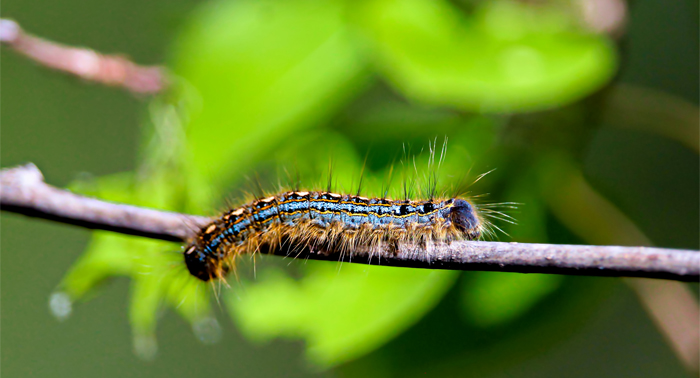
The forest tent caterpillar feeds on aspen poplar, green ash, mayday and several other trees and shrubs. In the early stages this caterpillar is black and hairy. When mature, caterpillars are 4 to 5 cm in length and have blue bands running along both sides of the body with white keyhole-shaped markings on the back.
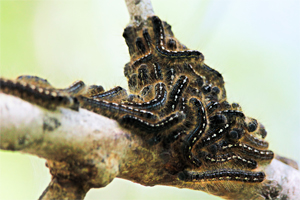
Towards the end of the caterpillar stage, they will cluster together on large tree branches or trunks. The caterpillar then makes a cocoon and later in the season turns into an adult brown moth that disperses and lays grey egg bands around small branches.
Current situation in Red Deer
Forest tent caterpillar populations are higher than usual in Red Deer this year. These native insects go through natural outbreak cycles, and residents may notice large numbers of caterpillars on trees, sidewalks, trails and in natural areas during May and June.
Forest tent caterpillars feed on several types of trees and shrubs, including aspen poplar, green ash and mayday. Tree defoliation can look concerning, but healthy trees often recover.
What The City is doing
The City is monitoring forest tent caterpillar activity and tree health in parks, natural areas, neighbourhoods, downtown patios and trail systems. Crews are using controls that don't involve chemicals, and may physically remove or squish caterpillars where practical during regular work. The City will also monitor areas where high caterpillar numbers may create slippery conditions on sidewalks, trails or roadways.
At this time, The City is not conducting large-scale pesticide treatment for forest tent caterpillar.
What residents can do
Residents can help manage forest tent caterpillars on their own property by:
- scraping caterpillar clusters from tree trunks and branches and squishing them. This is most effective when caterpillars are grouped together at night or during cooler weather.
- looking for and removing egg bands on small branches in the fall, after leaves have dropped
- monitoring small ornamental trees, especially if they have been heavily defoliated
Some domestic products containing Bacillus thuringiensis kurstaki, commonly called BTK, may be available to homeowners for caterpillar control. Residents who choose to use any pesticide should follow all label directions and ensure the product is registered and appropriate for the intended use.
When to report a concern
Residents do not need to report individual caterpillars or general sightings.
Please contact The City if forest tent caterpillars are creating a safety concern, such as slippery conditions on a public sidewalk, trail or roadway, or if a high-use public area is heavily affected.
More information
For more information please view the Forest Tent Caterpillar (pdf) pages from our Integrated Pest Management Manual.